
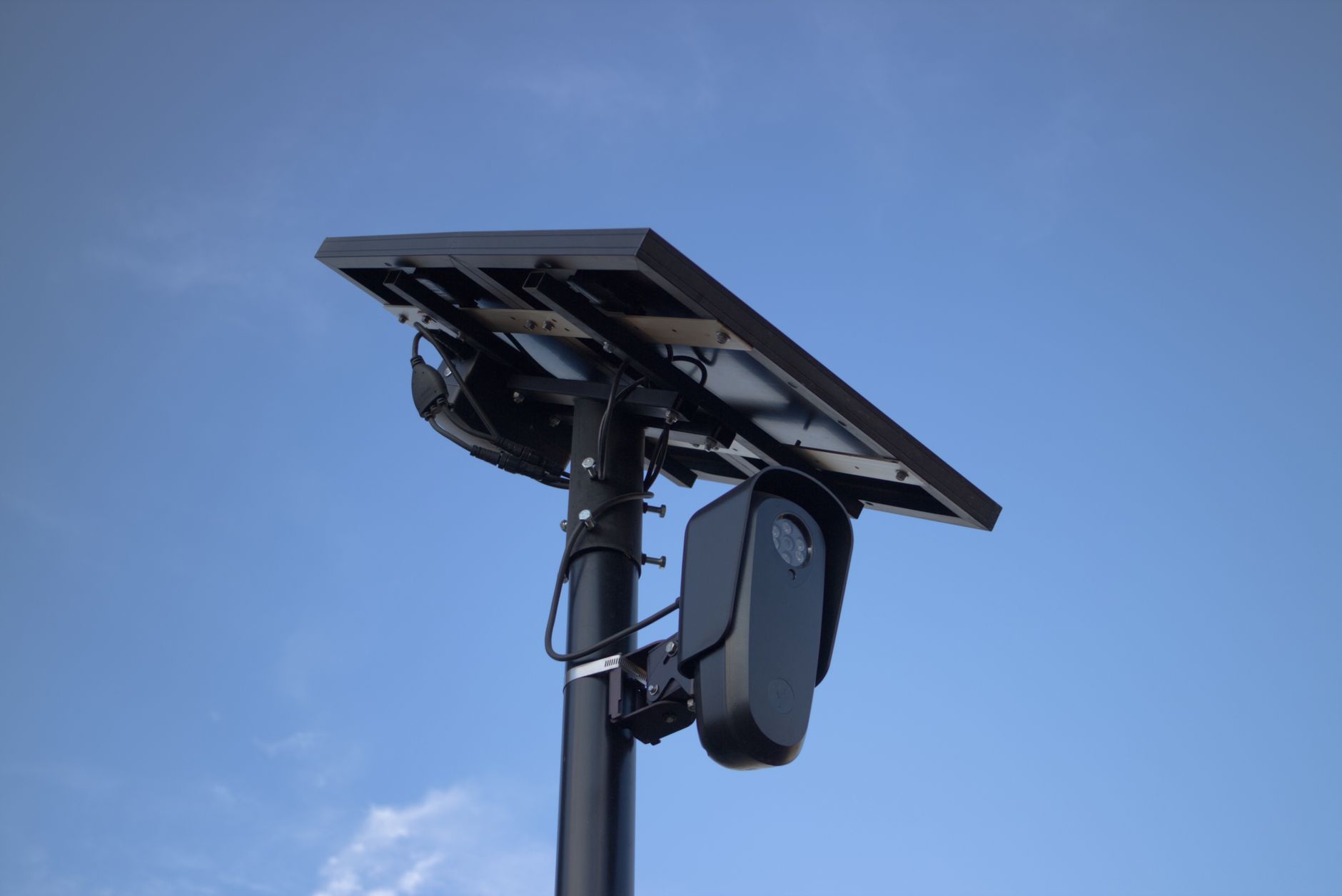
A Flock Safety camera photographs a passing vehicle, uses software to interpret its license plate and compares the result with databases containing stolen vehicles, wanted persons and police-created hot lists.
If the system identifies a possible match, an officer may receive an alert within seconds.
That speed is one of Flock's biggest selling points. It is also what gives an error the power to become dangerous almost immediately.
One misread character, an incorrect issuing state, an incomplete hot-list entry or a failure to compare the camera image with the vehicle on the road can turn an innocent driver into the subject of a high-risk traffic stop.
The software does not need to establish guilt. It only needs to persuade an officer that the approaching vehicle may be tied to someone dangerous.
Once officers draw their weapons, the difference between a preliminary lead and an accusation may offer little comfort to the person staring down the barrels.
Small Errors Can Carry Enormous Consequences
Flock acknowledges that its software can produce incomplete or inaccurate plate translations. The company says it filters low-confidence readings and reports optical-character recognition accuracy above 96 percent under favorable conditions.
That figure does not mean every complete plate is identified correctly. A plate contains several characters, and a mistake involving only one of them can connect an innocent vehicle to a record associated with a stolen car or serious crime.
Nor does camera accuracy account for every point at which the system can fail.
A camera may misread a letter or number. It may identify the wrong state. Dirt, glare, darkness, a plate frame or an unusual plate design may interfere with recognition. An officer may enter only part of a plate into a hot list. A recovered vehicle may remain listed as stolen. Dispatchers may relay incomplete information. Officers may overlook differences in the make, model, color or plate visible on the vehicle in front of them.
Some incidents involve a correct image but a bad interpretation. Investigators may decide that a vehicle recorded near a crime scene is the suspect vehicle even though the available time, location or physical details point elsewhere.
The risk therefore runs through the entire chain of decisions, from the roadside camera to the database, dispatch center, patrol car and jail.
Flock now describes an automated alert as an investigative lead that requires human review and corroboration. The company also says officers should visually verify a plate and should not base a stop on an unconfirmed alert alone.
Documented cases show what happens when those safeguards fail.
A Misread Plate, a Police Dog and a Jail Cell
In April 2024, Toledo police stopped Brandon Upchurch after a Flock camera reportedly read a "7" on his license plate as a "2."
Officers approached with weapons drawn and ordered Upchurch out of his truck. As he questioned why he had been stopped and began moving toward the ground, an officer released a police dog.
The dog bit Upchurch repeatedly. Officers took him to a hospital and then to jail, where he remained for several hours on charges that included resisting arrest and obstructing official business.
The truck was not stolen. The plate was not stolen. Upchurch was the registered owner.
Body-camera footage recorded an officer saying the camera appeared to have produced a mistaken hit. Prosecutors eventually dismissed the charges against Upchurch.
A Toledo police review concluded that the officers acted within department policy, although one officer was reprimanded for failing to visually verify the plate. Upchurch later sued, and the city agreed to a $35,000 settlement.
What began as a one-character error ended with injuries, hospitalization, jail and criminal charges.
An Infant Left in the Vehicle During an Armed Stop
In February 2026, a Flock camera in Sherwood, Arkansas, flagged a Chevrolet Tahoe as stolen.
Police stopped the Tahoe in a shopping-center parking lot. An officer drew a weapon and detained the driver. A passenger was also detained while a one-month-old baby remained in the back seat.
According to an incident report reviewed by KATV, the Tahoe's actual plate differed by one letter from the stolen plate identified by the system.
Officers released the occupants after discovering the error.
The mistake was corrected before anyone was physically injured. But correction came only after armed officers had already treated two innocent people as possible occupants of a stolen vehicle.
For the family inside that Tahoe, the system's confidence score and technical specifications were irrelevant. The consequences had already arrived in the parking lot.
Thirteen Days in Jail for the Wrong Vehicle
False conclusions involving Flock data do not always begin with a misread character. Sometimes a camera records the correct vehicle and investigators assign the wrong meaning to its presence.
Florida investigators arrested 23-year-old Lindsey Isaacs in April 2026 in connection with a 2025 hit-and-run crash that killed three people.
Authorities were looking for a Dodge Durango. Isaacs owned a black Durango, and Flock cameras had recorded her vehicle in the broader area around the time of the collision.
A later investigation reportedly determined that witnesses on a dark stretch of Interstate 4 may have mistaken a maroon Durango for a black one. Other available evidence also pointed away from Isaacs.
Isaacs spent 13 days in jail before prosecutors dropped the charges. Authorities later arrested another woman in connection with the crash.
Isaacs filed a lawsuit alleging that investigators disregarded evidence that should have eliminated her as a suspect.
The camera may have accurately photographed Isaacs' vehicle. The failure occurred when investigators treated proximity and a general vehicle description as if they established identity.
A technically accurate image can still support a profoundly inaccurate conclusion.
Evidence That Pointed Away From a Suspect Helped Put Him in Jail
Another example emerged in San Diego after police investigated an attempted armed carjacking involving a red Alfa Romeo with tinted windows. Officers did not have a clear plate number for the suspect vehicle.
A Flock camera recorded another red Alfa Romeo approximately five miles away, only seconds after officers had attempted to stop the vehicle they were pursuing.
That timing should have raised an obvious question: How could the same car be in both places?
Investigators nevertheless treated the Flock image as support for arresting Hugo Parra and Ariel Beltran. Parra spent nearly a month in jail before prosecutors dismissed the charges.
Police reports obtained by the Times of San Diego showed that the men denied being at the crime scene. No weapon was found in their vehicle. Additional Flock records and cellphone-location information could potentially have been used to test their account.
In this case, the surveillance data did not merely fail to prove guilt. Its time and location reportedly supported the men's claim that police had identified the wrong car.
Investigators still used it to help justify their arrests.
Roseville's Troubling Alert Record
Records from the Roseville Police Department in California offer a broader view of how frequently bad alerts can occur under actual operating conditions.
According to a Business Insider analysis of department records, Flock sent Roseville police 1,427 alerts during 2023 and 2024 for vehicles identified as stolen or associated with felony crimes. The department determined that the software had read the plates incorrectly in 71 percent of those alerts.
That finding does not mean Flock misread 71 percent of every plate the city's cameras photographed. It applies to the smaller group of alerts sent to officers, an important limitation that should not be blurred.
Flock said Roseville used an unusual configuration that included older equipment and cameras mounted higher and farther from traffic than the company recommends. The city had selected that arrangement partly to reduce the likelihood of photographing vehicle occupants.
Those conditions may explain some of the errors. They do not make the results meaningless.
Police technology operates on public streets, not inside a product demonstration. Darkness, rain, glare, dirty plates, unusual designs, traffic speed, camera placement and aging hardware are normal features of the environment in which officers must decide whether to stop a vehicle.
If a particular installation produces unreliable alerts, an agency needs to discover that through regular testing and public reporting, not after an innocent motorist is ordered out of a car at gunpoint.
Human Verification Is a Safeguard Only When It Happens
Flock and law-enforcement agencies frequently answer accuracy concerns by saying officers are required to verify alerts.
That is an essential rule. It is not evidence that the rule is consistently followed.
The documented incidents show officers acting without checking the original image, matching only part of a plate, overlooking the issuing state, disregarding differences in vehicle appearance or failing to examine information that contradicted the alert.
Automated systems can also influence how people interpret uncertain information. An officer who receives an urgent stolen-vehicle or felony alert may approach the encounter expecting a dangerous suspect. The officer may then interpret an innocent driver's confusion, hesitation or demand for an explanation as defiance.
The software supplies the initial suspicion. Human assumptions can escalate it into force.
What Every Agency Using Flock Should Disclose
Public agencies should not be permitted to advertise arrests and vehicle recoveries attributed to Flock while withholding the information needed to evaluate its failures.
Every agency operating the cameras should publish:
The number of alerts generated each month.
The number of alerts that lead to stops, searches, arrests or vehicle seizures.
The number and percentage of alerts determined to be inaccurate.
The reason for each false alert, including camera misreads, incorrect states, incomplete hot-list entries and outdated records.
The number of times officers failed to perform required verification.
The agency's rules for confirming the plate, state, vehicle description and hot-list status before a stop.
Whether officers may initiate a high-risk stop based solely on an automated alert.
How quickly expired, corrected or recovered vehicles are removed from hot lists.
What happens when the same innocent vehicle repeatedly triggers false alerts.
What disciplinary action applies when an officer ignores the verification policy.
Agencies should preserve false-alert and near-miss records, subject their systems to independent testing and include measurable accuracy requirements in their contracts.
Residents should also have a practical process for reporting a recurring false identification and obtaining confirmation that the underlying error has been corrected.
Without those measures, the public sees a carefully selected list of successes while the system's human costs remain scattered across body-camera videos, lawsuits and local news reports.
An Alert Is Not Evidence of Guilt
Automated license plate readers can provide useful leads. They can help locate stolen vehicles, identify cars connected to serious offenses and narrow an investigation when time matters.
That usefulness does not make every alert reliable, and it does not excuse treating a possible match as a verified fact.
The documented failures are not harmless software glitches. Innocent people have been confronted with guns, bitten by a police dog, arrested, jailed, prosecuted and forced to assemble evidence proving they did not commit crimes.
A false hit does not remain inside a computer system.
It becomes patrol cars in the mirror.
It becomes shouted commands and weapons pointed at a vehicle.
It becomes handcuffs, booking photographs, legal bills, missed work and trauma.
Flock describes its alerts as investigative leads. Police departments must treat them accordingly.
When an agency allows automated suspicion to replace verification, one incorrectly interpreted character can unleash consequences that no correction can fully undo.
Sources
Company policy: Flock Safety, License Plate Reader Policy, accessed August 23, 2026.
Company statement: Flock Safety, How an Automatic License Plate Recognition System Works, July 2026.
Company statement: Flock Safety, Flock Updates Privacy, Accountability, Security, and Transparency Safeguards, August 13, 2026.
Secondary reporting: Nicole Einbinder, Flock Safety's AI Cameras Misread Plates. Innocent People Pay., Business Insider, March 9, 2026.
Secondary reporting: WTVG Staff, Man attacked by K-9 during traffic stop sues City of Toledo, 13ABC, April 9, 2025.
Secondary reporting: Christopher Gay, Sherwood stop sparked after Flock camera misread plate by one letter as stolen, KATV, March 18, 2026.
Secondary reporting: FOX 35 Orlando, Florida woman wrongly arrested for deadly hit-and-run shares experience, June 2, 2026.
Secondary reporting: News 6 / ClickOrlando, Woman wrongly jailed in I-4 deadly crash files lawsuit against Florida Highway Patrol, June 10, 2026.
Secondary reporting: Jesse Marx and Dorian Hargrove, A Flock license plate reader linked a San Diego man to a violent crime. He was five miles away., Times of San Diego, June 7, 2026.
Secondary reporting: Nicole Einbinder, In one California town, Flock misread license plates in 71% of the alerts it sent to police, Business Insider, July 31, 2026.