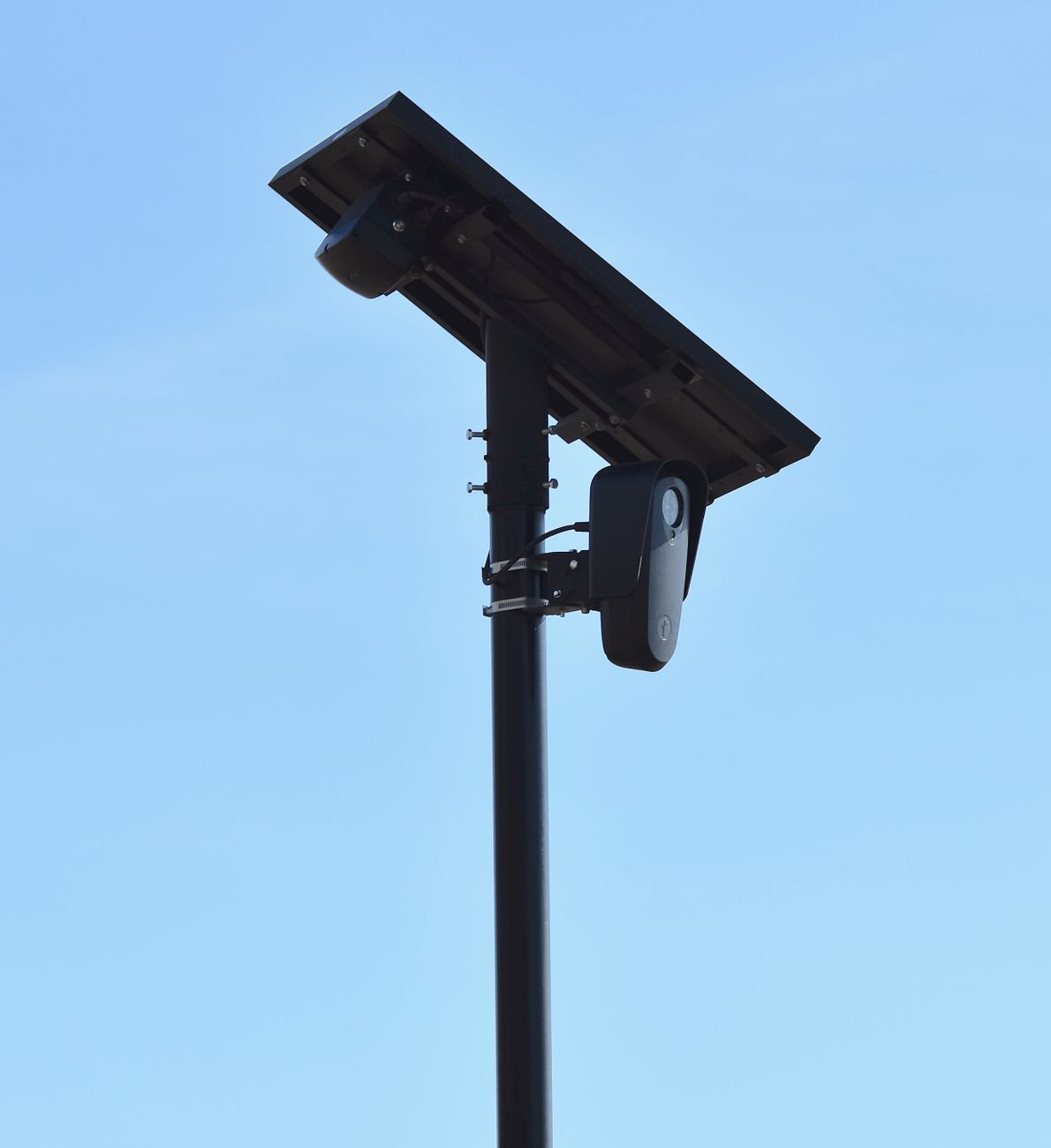
Flock Safety would like the public to believe transparency is built into its surveillance network.
The company promotes its “Transparency Portal” as a way for communities to learn how local agencies use Flock’s automated license plate reader technology. On the surface, it sounds like exactly the sort of accountability tool that should accompany a surveillance system capable of recording the movements of millions of motorists.
Look a little closer, however, and the portal begins to resemble something else entirely: a carefully controlled public-relations exercise dressed up as transparency.
It offers glowing descriptions of the technology, statistics selected for public consumption, an FAQ that presents Flock’s version of controversial issues, and — in some cases — search logs stripped of information necessary to determine whether individual searches were actually legitimate.
Calling that “transparency” stretches the word beyond recognition.
Transparency Without the Details
One of the most important accountability mechanisms offered through some Flock Transparency Portals is the publication of agency search activity.
That sounds promising.
If police are using a massive network of cameras to search motorists’ movements, the public should be able to examine how that power is being used.
But a meaningful audit requires context.
A useful search log should allow reviewers to answer basic questions:
Who performed the search?
Why was the search conducted?
Was it connected to an actual investigation?
Was a case number provided?
What information was searched?
When did the search occur?
Remove enough of those details and a “search log” becomes little more than a list of timestamps and vague explanations.
The public may technically be able to see that searches occurred while being given no realistic way to determine whether those searches complied with agency policy.
That isn't meaningful transparency. It is visibility without accountability.
Imagine a government credit-card report that showed the date of every purchase but concealed what was purchased, who made the purchase and where the money went.
Nobody would seriously call that a financial audit.
Yet Flock’s version of transparency can operate on essentially the same principle: show the public enough information to say the records are available, while withholding enough context to make independent scrutiny extraordinarily difficult.
A Transparency Portal Written by the Company Being Scrutinized
There is another fundamental problem with the entire concept.
Flock Safety isn't an independent watchdog.
It is the company selling the surveillance system.
Yet much of the explanatory material appearing alongside these supposedly transparency-focused resources comes from Flock itself.
That creates an obvious conflict.
The company has every financial incentive to reassure residents that its technology is safe, effective, tightly controlled and respectful of privacy. Controversies surrounding automated license plate readers aren't merely abstract policy debates for Flock — they can influence whether cities renew contracts, whether lawmakers impose restrictions and whether communities accept additional cameras.
Visitors should therefore recognize the distinction between disclosure and marketing.
A page explaining why the company’s own product supposedly isn't a threat to privacy isn't independent transparency simply because the word “transparency” appears at the top.
It's corporate messaging.
The FAQ Is Where Things Get Particularly Interesting
Flock’s FAQ sections attempt to answer many of the questions residents are increasingly asking about automated license plate readers.
Who owns the data?
Can agencies access cameras outside their jurisdiction?
Does Flock track people?
How long is information retained?
Can federal agencies obtain access?
What safeguards prevent abuse?
These are legitimate questions involving privacy, civil liberties and government surveillance.
They deserve precise answers.
Instead, corporate FAQs can rely on carefully framed statements that may be technically defensible in isolation while leaving out important context necessary for the public to understand how the network actually operates.
There is an enormous difference between answering a question and answering it completely.
For example, focusing exclusively on whether a camera uses facial recognition does little to address the broader privacy concern surrounding a system capable of recording where vehicles appear and allowing authorized users to search those observations.
Likewise, telling residents that agencies establish policies governing searches doesn't answer the obvious follow-up question:
Can the public actually verify that those policies are being followed?
If the search records made available for public review omit the information necessary to make that determination, the supposed safeguard becomes largely a matter of trust.
And “trust us” is not transparency.
The Missing Information Matters
The omissions become especially troubling because abuse of surveillance technology does not necessarily look dramatic.
It can be one improper search.
An officer searching a former partner.
Someone looking up a neighbor.
A search performed for personal curiosity.
A plate queried without a legitimate law-enforcement purpose.
A search attributed to an investigation that doesn't actually exist.
Those are precisely the kinds of activities an audit should be capable of identifying.
But auditors need data.
If identifying information, search parameters, case references or meaningful justifications are absent, verifying suspicious activity can become substantially harder — sometimes impossible without obtaining the underlying records directly from the agency.
That raises an uncomfortable question:
What exactly is the transparency portal supposed to make transparent?
If residents must file open-records requests to obtain the information necessary to evaluate the activity displayed on the transparency website, then the website has failed at its most basic advertised purpose.
Real Transparency Would Make Independent Verification Easy
There is nothing inherently complicated about meaningful transparency.
A genuinely useful public accountability system could provide appropriately redacted search logs containing enough information to determine whether searches correspond to legitimate law-enforcement activity.
It could publish agency policies prominently.
It could disclose what databases and external agencies are connected to the system.
It could provide historical statistics rather than selectively framed numbers.
It could explain documented limitations and controversies surrounding the technology rather than functioning primarily as a sales pitch.
Most importantly, it could provide enough information for journalists, researchers and ordinary residents to independently verify the claims being made.
Because transparency isn't measured by how much information an organization publishes.
It is measured by how much scrutiny that information permits.
Transparency Shouldn't Require Trust
Flock Safety has built an extraordinarily powerful surveillance network.
That fact alone doesn't prove the technology is being abused. Automated license plate readers can unquestionably assist legitimate criminal investigations.
But powerful surveillance tools require powerful accountability mechanisms.
A company-operated webpage filled with reassuring explanations and incomplete records isn't an adequate substitute.
The public shouldn't have to accept Flock Safety’s description of its own technology at face value. Nor should residents have to assume every police search was legitimate simply because the information necessary to evaluate it has been omitted from the company’s transparency portal.
Accountability requires evidence.
Transparency requires context.
And oversight requires the ability to independently verify what government agencies — and the companies providing their surveillance infrastructure — tell us.
Without those things, Flock Safety’s Transparency Portal isn't really a window into the system.
It's a showroom window.
You can see exactly what the company wants you to see.