
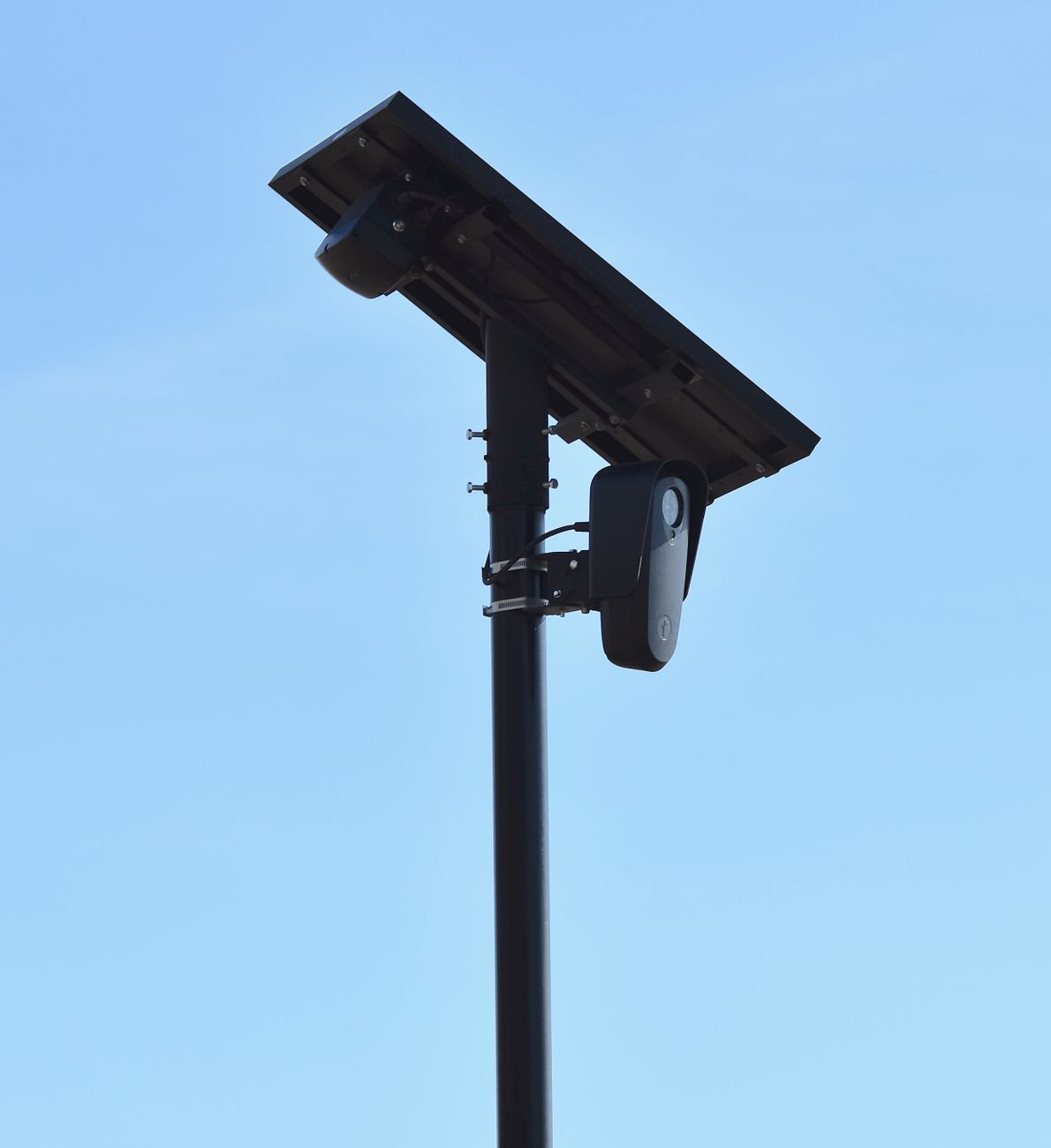
The Houston County Sheriff's Office in Georgia intends to continue retaining data collected by its Flock Safety automated license plate reader cameras for 30 days, despite the company's new recommendation that law enforcement agencies reduce their default retention period to seven days.
Sheriff Matt Moulton told 13WMAZ reporter Amanda Allen that a seven-day limit could leave investigators without information they need, particularly when a crime is not reported immediately.
That concern is not unreasonable. A victim may wait days before reporting a burglary, theft or suspicious incident. Investigators may also need time to identify a possible vehicle before they know what data to search.
But the longer retention period carries a cost. It allows the agency to search a full month of vehicle observations involving people who, in nearly every instance, have no connection to a crime.
What Flock changed
On August 13, Flock Safety announced that it was changing its recommended and default ALPR retention period from 30 days to seven days.
The company said its analysis found that more than 90 percent of searches conducted without a complete license plate occur within the first week. Flock also announced an Evidence Mode that allows investigators to preserve specific records connected to active cases.
The change is not mandatory for existing customers. Flock said existing agencies may keep their current retention periods, leaving the final decision with local officials.
Evidence Mode does not entirely resolve the concern raised by Moulton. It can preserve evidence that investigators identify within the initial retention period, but it cannot recover records that have already been deleted before a delayed crime report is received.
The real policy question is therefore not whether older data might occasionally help solve a crime. It almost certainly can. The question is whether retaining every captured vehicle observation for 30 days is necessary and proportionate to that benefit.
Retention affects ordinary drivers
Flock cameras create point-in-time records of vehicles traveling on public roads. Those records can include a photograph, license plate, date, time, location and identifiable vehicle characteristics.
One observation may reveal relatively little. Multiple observations collected across a network can provide substantially more information about where a vehicle appeared and when.
A retention policy determines how far back investigators can search that information. Reducing the period from 30 days to seven would not stop the cameras from collecting data, but it would significantly reduce the historical window available for searches.
Keeping the longer period means Houston County residents and visitors remain searchable for approximately one month after passing a camera, regardless of whether they were suspected of wrongdoing when the information was collected.
Georgia law permits the policy, but does not require it
Under Georgia Code Section 35-1-22, Georgia law enforcement agencies may collect license plate data and access it for law enforcement purposes. The statute generally requires the information to be destroyed within 30 months unless an exception applies.
The law also requires agencies operating ALPR systems to maintain policies governing their use and operation, including officer training.
Houston County's 30-day period is far shorter than Georgia's statutory ceiling. Nothing in the law, however, requires the sheriff's office to retain the data for 30 days. That is a local policy choice.
Compliance with the statutory maximum answers the legal question. It does not necessarily answer whether 30 days is the shortest period reasonably capable of meeting the agency's investigative needs.
The agency should support its decision with evidence
Houston County can strengthen its justification by publishing data showing how frequently records older than seven days materially assist investigations.
Useful information would include:
The number of searches involving data between eight and 30 days old.
The number of those searches that produced a relevant investigative lead.
The types of cases in which older records proved useful.
The number of searches conducted each month and how frequently they are audited.
Whether exported images or search results may be retained beyond the 30-day period.
Who approved the retention period and how often the policy will be reviewed.
Those disclosures could be made without revealing protected license plate data or compromising individual investigations.
The sheriff's office has previously defended the system as an investigative tool rather than a means of monitoring residents. Moulton has also acknowledged that Flock access can be abused and said the agency has policies for addressing misuse.
Retention limits, however, are only one safeguard. A shorter period does not prevent an improper real-time search, while a longer period increases the amount of historical information available to anyone with authorized access. Effective oversight also requires meaningful search restrictions, verified case information, frequent audits and consequences for misuse.
A choice that deserves public scrutiny
There is a legitimate public-safety argument for preserving data long enough to investigate crimes reported after a delay. There is also a legitimate privacy interest in deleting records of innocent motorists as quickly as reasonably possible.
The Houston County Sheriff's Office has chosen the longer investigative window. It should now demonstrate, with evidence rather than general assurances, why that additional collection is necessary.
The public does not have to accept the false choice that it must support either effective investigations or reasonable privacy protections. Houston County can pursue both.
If 30 days is truly necessary, the agency should be able to show why. If the additional 23 days rarely produce meaningful investigative results, continuing to retain the information becomes much harder to justify.
Sources
Secondary reporting: Amanda Allen, Houston County keeps 30-day retention period for Flock camera data, 13WMAZ, September 2026.
Primary corporate statement: Garrett Langley, Flock Updates Privacy, Accountability, Security, and Transparency Safeguards, Flock Safety, August 13, 2026.
Statutory text: Georgia Code Section 35-1-22, 2025 Code of Georgia, published by Justia.